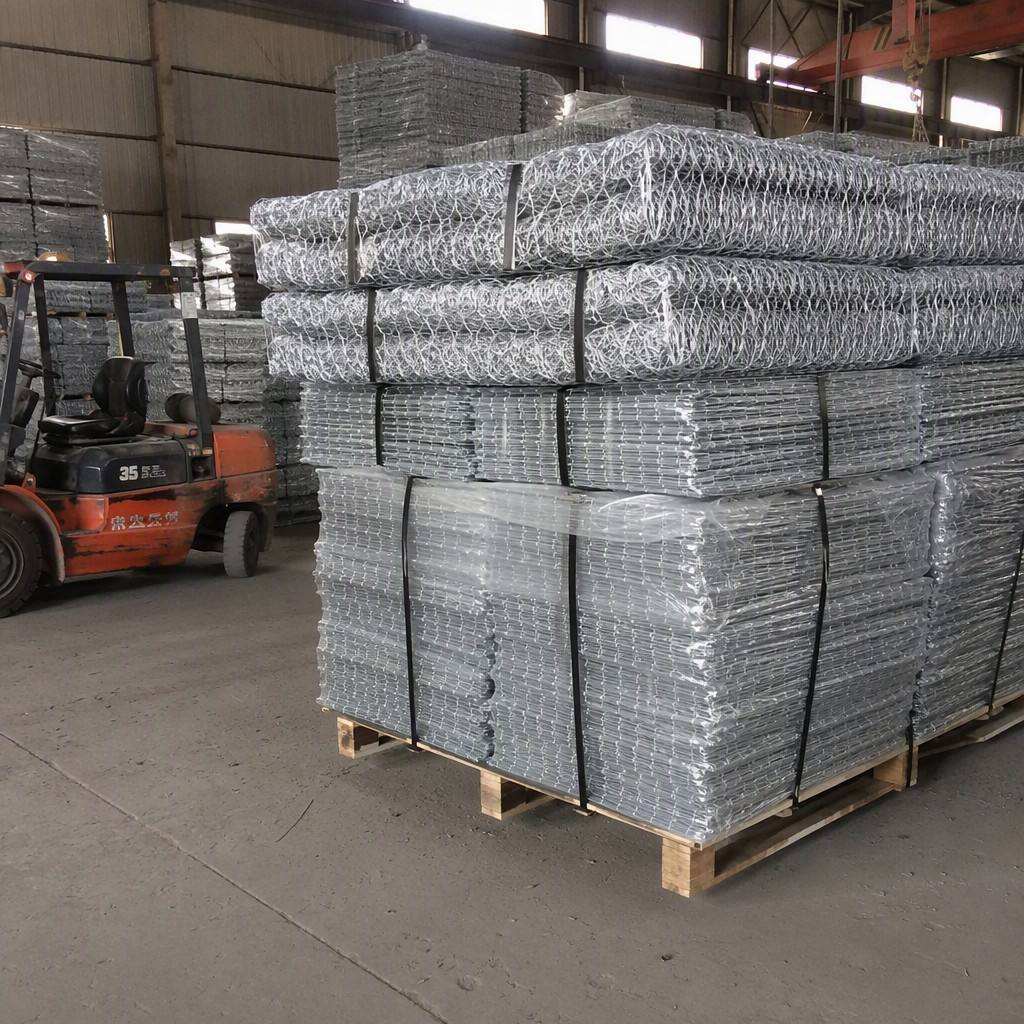
We offer comprehensive technical support for gabion boxes, reno mattresses and heavy hexagonal wire mesh to assist engineers, contractors and distributors during project design, procurement and construction.
Installation Guide
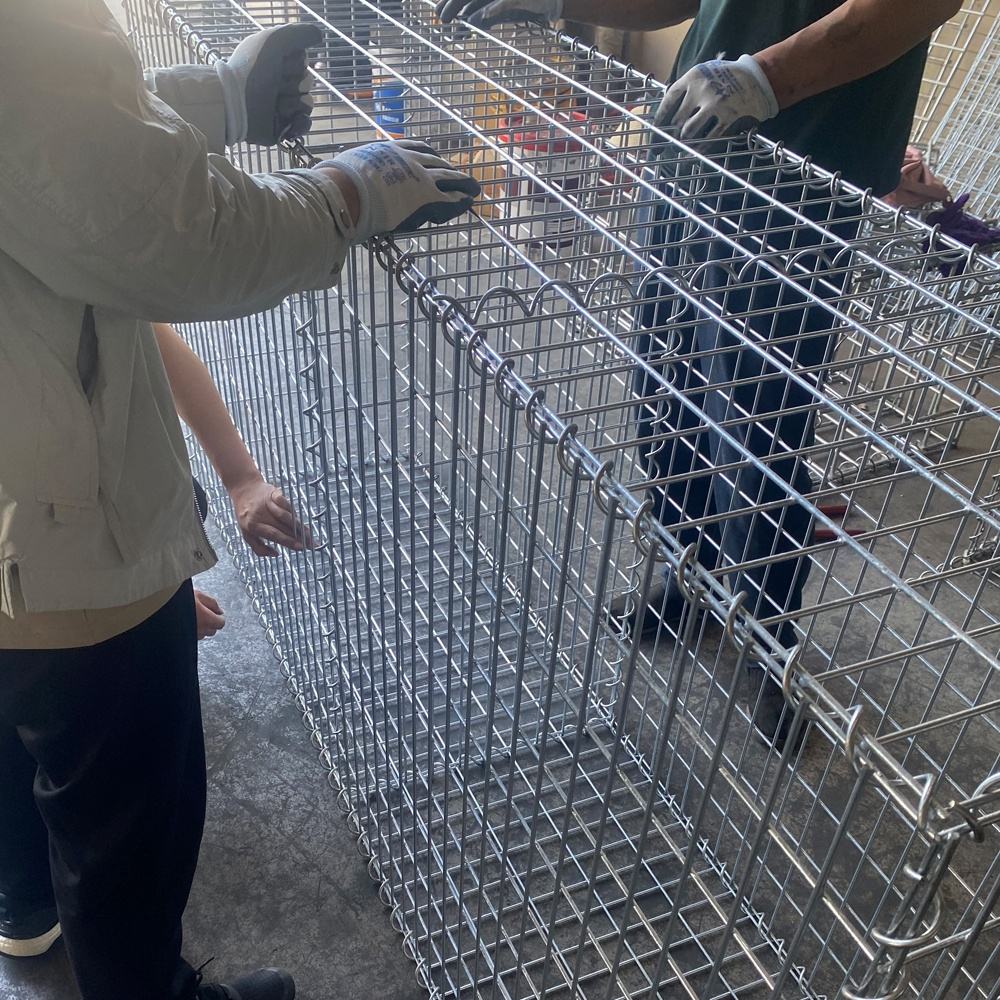
Our official installation manual covers the complete on-site construction procedure. It includes unpacking and assembly of folded gabion panels, binding and reinforcement requirements, stone selection and filling standards, laying sequence for reno mattresses, staggered stacking rules for gabion retaining walls, joint treatment, drainage coordination and quality inspection items. We also list typical construction errors and corresponding solutions. You can download the full PDF manual, and remote technical guidance is available for large-scale projects.
Container Loading Reference
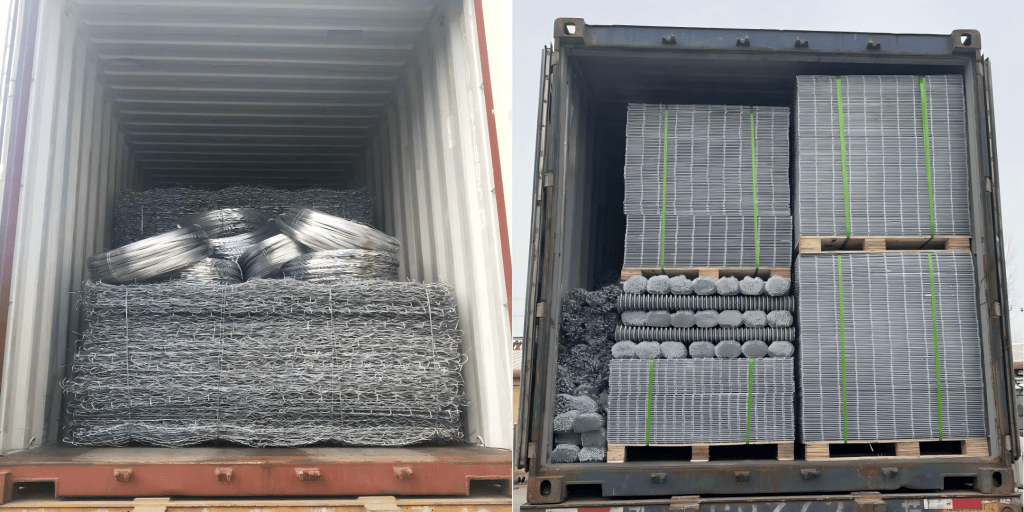
All gabion mesh is shipped folded without stones. We provide loading reference data for 20GP, 40GP and 40HQ containers, including volume and quantity estimates for regular sizes of gabion boxes and reno mattresses. Accessories such as lacing wires and stiffeners are packed separately. The actual loading quantity varies by wire diameter, mesh opening and packing method. Contact us for an accurate loading calculation tailored to your order.
Zinc & PVC Coating Standard
Anti-corrosion coatings determine the service life of gabion products.
Hot-dip galvanized wire: zinc coating mass from 230g/㎡ to 300g/㎡, suitable for inland freshwater and general atmospheric conditions.
Galfan (Zn-Al alloy) wire: better anti-corrosion performance than ordinary galvanized wire, widely used for long-term hydraulic and slope projects.
PVC coated wire: PVC thickness ranges from 0.4mm to 0.7mm, extruded over galvanized or Galfan core wire. It performs well in brackish water and high-corrosion environments. Coating test certificates can be supplied for bidding and acceptance.

Load & Structural Note
Gabion is a flexible geotechnical structure rather than rigid concrete. Its bearing performance is affected by foundation geology, wall height, filling quality and backfill drainage. We provide reference earth pressure data and recommended safe stacking heights for preliminary design. All load information is for reference only. Final structural design must be verified and approved by your local qualified geotechnical engineer in accordance with local codes and site conditions.